Trust and estates: Real-world problems, real-world solutions
July 23, 2026
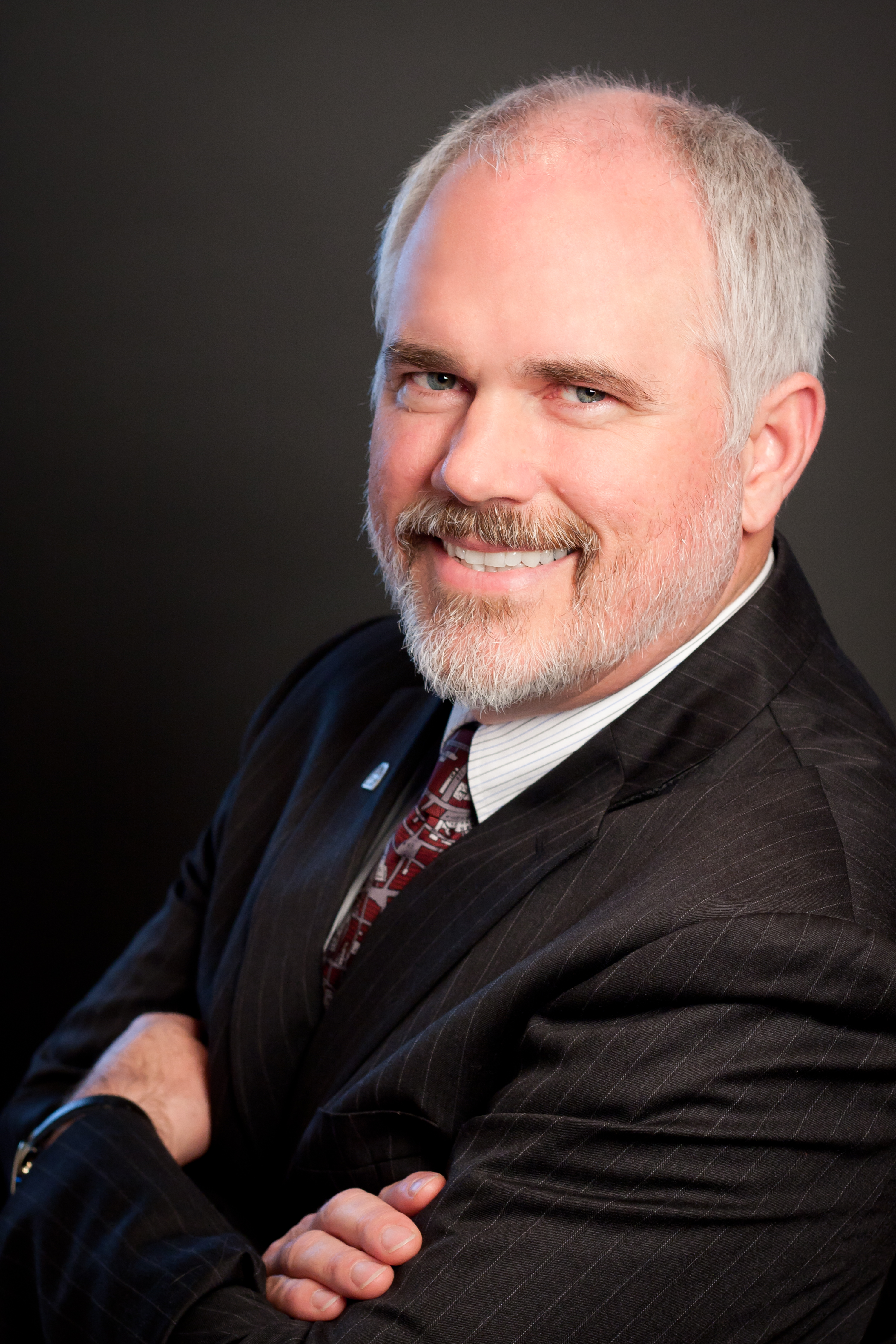
Clint Bentz, CPA
Clint Bentz Consulting, LLC
Scio, Oregon
Leader, 2026 Trust + Estate Mastery Series
What drew you to trust and estate tax planning, and what keeps you engaged?
I got first involved in estate planning because of my own family’s situation. My dad and mom, Ron and Barbara Bentz, had spent their lifetime buying and building up the Blue Den Ranch—an award-winning 700-acre family forest and recreational property located in Linn County, Oregon. I was the oldest of their five children and all five of us left home to go to college and didn’t come back after school. At one point in the mid 1980’s, the closest of us was 3,000 miles away from home and my dad called me to let me know he was thinking about giving the ranch away to a local charity since none of us seemed interested in continuing their work. After much discussion, I moved my young family back to Oregon to begin the process of figuring out how to create a succession plan that would not only provide for the ranch to continue in family ownership but would also draw our family back together. The local CPA firm I went to work for didn’t have anyone practicing in this area, and I found that very few legal and tax practitioners in Oregon were focused on multi-generational estate and succession planning. I discovered the Austin Family Business program at Oregon State University (now the Center for Family Enterprise), which was and is a wonderful resource for family business owners and consultants, and I became a board member. As a result of the work with my parents, at their passing I became the manager of Blue Den Ranch, LLC, and 38 years after we started this adventure, all of my brothers and sisters and over half of the third generation, including many of our spouses (total of 19 members to date), are now active participants in shaping the future of our shared business enterprise. Along the way, I discovered that many of our clients faced the same challenges we faced as a family, and this became a national practice niche for us.
What keeps me engaged are the many challenges family business owners of all types face when attempting succession and the numbers bear this out. Seventy percent of first-generation family business owners want to pass their business to the next generation, but only 30% of these businesses successfully transition to the 2nd generation. Only 3% successfully transition to the third generation and beyond. Working with these families and helping design successful transition strategies and coaching the families through this difficult process has been the most challenging and satisfying part of my personal and professional career.
To the average person, tax planning can feel technical — how do you communicate complex trust and estate tax issues in a way clients can truly understand?
As CPAs we are generally more focused on the client’s current income tax liabilities than their assets, personal cash flows, lifestyle requirements, and future goals. Even if we are not the principal driver in the process, estate and trust planning requires us to get more deeply involved in our client’s lives to properly advise them. I always start with helping the client to verbalize and get into writing what they want to see happen with their family, their health, their lifestyle, and their assets during the remainder of their lifetime and at death (define their goals) and then identify the obstacles they see to achieving these goals. After we know and agree on what problems we are trying to solve, I then work with them and their other professionals (legal, financial advisor, insurance, etc.) to create an estate plan designed to overcome these obstacles and achieve their goals. When presenting the various strategies we propose using, I try to communicate three things in language they can understand:
1. What are the challenges and risks of doing nothing – retaining the status quo
2. How the proposed strategies can help them achieve their goals
3. What are the options, costs, and areas of risk inherent in the strategies, including any areas of ongoing compliance that may be required (e.g. additional tax returns, appraisals, annual family meetings, distributions to family members, etc.).
I try to keep the discussion focused on the intended result and how this will impact their day-to-day lives, not on the technical details. I have also developed written documents that describe these various strategies in more detail for clients who want to peek under the hood and gain a more detailed understanding of how the strategies work, why they are important, and when they are appropriate.
How does the Oregon tax landscape shape the planning strategies you recommend to clients?
The Oregon estate tax beginning for gross estates over $1,000,000 is the primary driver here. Statistics show that we file more taxable estate tax returns in Oregon each year (over 3,000) than are filed nationally for the federal estate tax (roughly 2,200). There are another roughly 4,000 non-taxable federal estate tax returns filed annually to make portability and federal QTIP elections, many of which are being filed by Oregon executors since we are already filing an Oregon 706. Since Oregon, Washington, and Hawaii are the only states west of the Mississippi River that have a separate estate tax (and both have higher exemptions than Oregon), and Oregon is surrounded by community property states which grant surviving spouses a full step-up in basis on all their community property, exploring moving their assets and/or legal residency to another state to reduce or avoid the Oregon estate tax is also generally part of the discussion.
What tax changes or policy developments are having the biggest impact on estate and trust planning right now?
The permanent increase in the federal estate tax exclusion amount to $15 million, plus the portability of the deceased spouse’s unused exclusion (DSUE), has moved our traditional estate planning discussion from minimizing the estate tax at the surviving spouse’s death by including the maximum tax-free amount of the decedent’s share of their assets in the estate of first to die, to maximizing the income tax cost basis for assets transferred to the heirs by including them in the taxable estate of the surviving spouse. For joint estates under $15 million, we now generally want all the first decedent’s assets to be included in the surviving spouse’s estate. For joint estates between $15 and $30 million, we are now forecasting to see if we get a better income tax result by retaining assets and paying some Oregon estate tax at the first death rather than moving all the assets to the surviving spouse’s estate. For joint estates over $30 million, much more planning during lifetime is now required. The new Oregon Natural Resource Exemption program (ORS 118.145) has also expanded the ability for family farms, ranches, forestlands, and commercial fishing businesses to reduce or eliminate the Oregon estate tax when these businesses stay in the family rather than being sold.
What are the most frequent mistakes you see in estate or trust planning? What early tax planning steps make the biggest difference?
The biggest mistake I see is when people procrastinate and don’t get their plans drafted, signed, and funded timely. None of us know how many days, months, or years we have remaining in this life! I have had clients who had accidents and died before their plans were finalized and this just compounds the tragedy. Everyone needs a will, even if they also have a revocable living trust. The final mile is that all assets need to be titled in accordance with the plan. We always conduct a “fire drill” with the client as part of this process—you just died, what happens now?
The second mistake is not periodically reviewing their estate plans. This is not a “once and done” activity. Recent law changes both nationally and in Oregon make a review of current estate plans a necessity. I have worked many times with executors of estate plans that were out of date and the estate and the heirs ended up with tax liabilities that were not necessary if the plan had been updated. Also, assets were purchased and sold, and new accounts were opened up since the plan was created. Does the titling of these new assets or the change in assets require some changes to be made to the plan? I had a client who directed their closely held stock to be contributed to a charity at death. They later sold the stock back to the company on an installment note, and the note was now being used to fund the charitable bequest. This change in the nature of the asset created a taxable event for the estate at death and reduced the charitable deduction. We advised the client to change the language of the charitable bequest to remove this problem, but unfortunately they died in a car accident before the changes were made.
The third mistake is trying to work with tax and legal professionals who do not specialize or stay current in this area of practice. This is a very technical and complex area of the law made more complex because of the many times contradictory goals of the client, and the emotional and family issues that need to be surfaced and addressed as part of drafting the documents and implementing the plan. The law and common practice in this area changes frequently and what worked for one client may not be the right answer for another client, or maybe not even anymore for the original client as a result of law and regulatory changes and recent court cases.
Another huge argument for starting early is the risk of disability, diminished capacity, and elder abuse. For many reasons, including diminished capacity, clients can lose their legal capacity to make these important life and death decisions. Even before they get to that point, they can make bad decisions because of reduced capacity and/or they are subject to undue influence from children, caregivers, and others. The National Center on Elder Abuse reports that one in five older adults experience some sort of financial exploitation and lose an estimated $28.3 billion annually as a result. I encourage my clients to make and update their estate plans early in life (to make certain their minor children are properly cared for), during mid-life (to ensure that their retirement plans will work as expected, important assets are protected, and spouses and others are cared for), elder years (to make sure they are cared for and protected from elder abuse, and that heirs and important causes are cared for), and anytime the laws change. If you don’t state in writing in the appropriate document who you want to make sure you are cared for properly, and make financial and medical decisions on your behalf in the case of temporary or permanent disability, the courts will choose someone for you.
Why are you excited about the 2026 Trust & Estate Series and what should attendees expect?
I have been advising clients and preparing and reviewing federal and Oregon trust and estate returns for over 35 years and led my firm’s trust and estate group for many of those years. For most of that time I have also been teaching and training CPAs, attorneys, and trustees across the U.S. how to do this work since there is so little continuing education on these topics. I was also one of the principal drafters of the current version of Oregon’s estate tax law (ORS 118) and was involved in the drafting and rulemaking for both the Natural Resource Credit and Exemption programs contained in that law (ORS 118.140 and 118.145). This Estate and Trust Mastery Series is based on real world problems and solutions in what I hope will be an accessible, engaging, and entertaining format. See you there!
Clint Bentz, CPA, CMA, is founder and managing member of Clint Bentz Consulting, LLC, a family business consulting firm specializing in estate and succession planning for family-owned businesses. Before founding Clint Bentz Consulting in 2018, he worked as a corporate controller and planned giving officer, and then spent 30 years in public accounting as a CPA at Boldt Carlistle + Smith, where he led the firm’s trust and estate group.