Legacy, connection, and the next wave of Society leadership: A conversation with Board Chair Adam Abplanalp
May 08, 2026
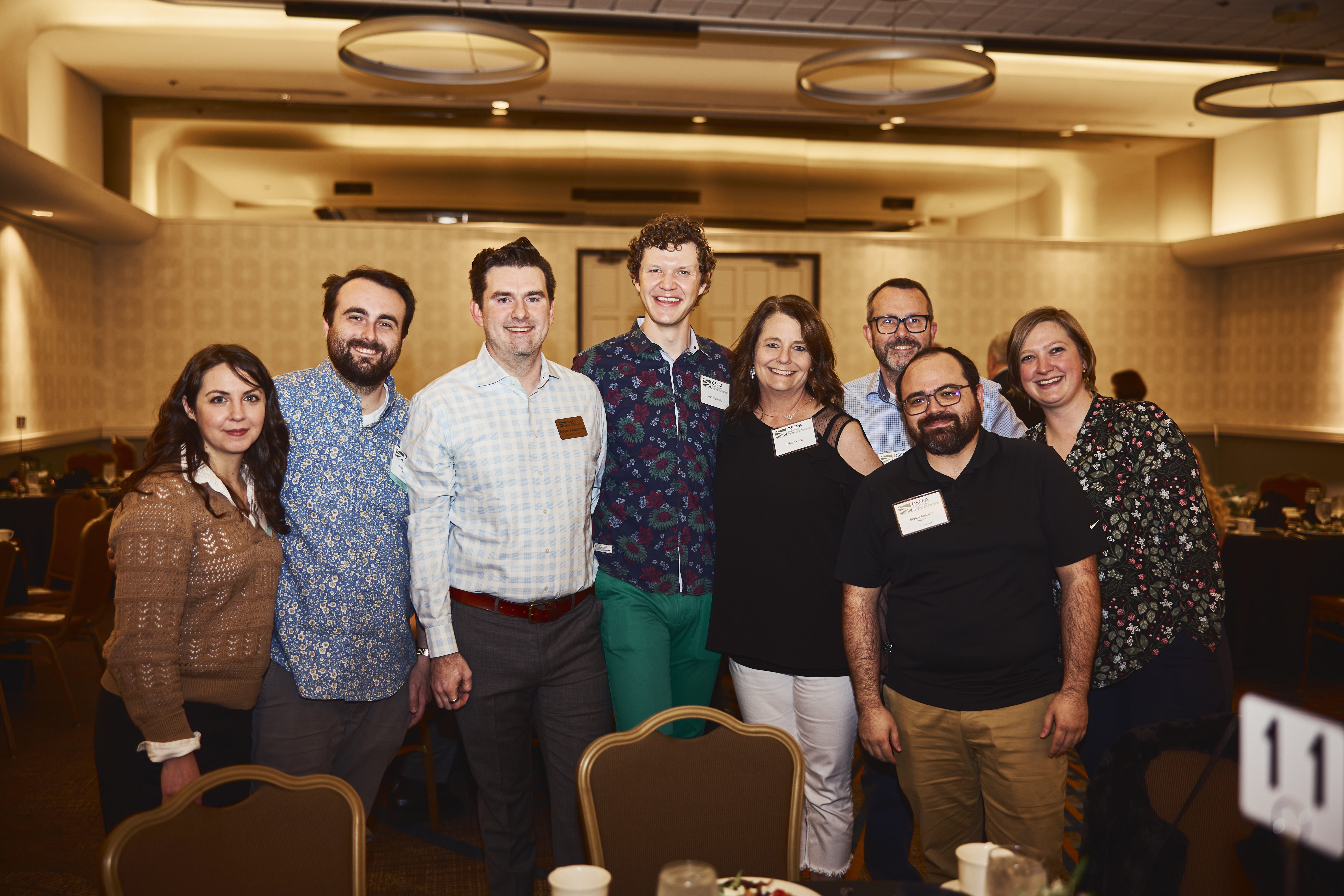
As Adam Abplanalp took the helm as Chair of the OSCPA Board of Directors April 1, he was likely the youngest Board Chair in OSCPA’s 118-year history. We sat down with Adam to talk about the day he fell in love with accounting, why he considers himself an accounting translator, and what propels him to a lifetime of learning.
At the University of Oregon I was a political science major in the Honors College, and I was pretty lost. I didn’t know where I was going or what I wanted to do. I tried an English major, a classics major, a Latin major. I had worked at Bank of America while in school, so I had some exposure to the business world, and my dad encouraged me to get a business minor because it’s practical. One of the required classes was Accounting 211. When I left class after the first day, I was in love with accounting. The instructor was (2013-14 OSCPA Board Chair) Michele Henney. The fact that I am going to be Chair of the Society is in no small part due to her leadership and the way she talked about OSCPA. Michele had such an impact.
I didn’t go directly into public accounting after college though. I never really wanted to. I worked in banking for ten years and got my CPA license in industry. But I knew I didn’t want to work in the corporate world forever, and decided it was time to set out on my own, so in 2014, I left the corporate world and started an accounting firm. There
was a lot to learn starting a firm. Not just learning how to do taxes (about which I knew way less than I thought I knew), but the ins and outs of how to run a firm, manage other people, balance client expectations and deadlines, write engagement letters, send invoices, and all the things you do in a firm. I’m grateful for mentorship from several CPAs I’d worked with in the community or knew personally who humored me and answered my questions and walked me through things. It was a lot of learning.
Call someone, take them to coffee, find out their story. You learn so much about people that way. Go to a committee meeting — that’s where I really started getting involved. It’s empowering for your own career, but it’s also a deep source of connection with people you might want to work with sometime in the future.
My own story of becoming involved in OSCPA starts with a committee. Within a year or so of starting my firm, I wanted to get more involved and meet people. I needed to understand how this stuff works.
I remember a Taxation Strategic Committee meeting where I sat having coffee with (veteran committee member) Heather Jackson while she explained how everything worked. That’s when I really started getting involved in tax advocacy and legislative monitoring. By the time COVID hit, I was chairing the Taxation Strategic Committee. There are all sorts of people I’ve met from OSCPA, and you know, this project comes up or they’ve got this dilemma, or they have this client — and those connections are what make it fun.
I think so. In many ways I think of myself as an accounting translator. So much of my job is not even doing accounting or taxes – it’s talking about accounting, talking about taxes, explaining to people what it means and why. I think that also translates directly into explaining to legislators and regulators how the changes they make to the tax law impact businesses, individuals, and tax practitioners.
I’ve always been driven to learn new things — then I love sharing those things; I love teaching. (Adam teaches State & Local Taxation courses for OSCPA.) So, it’s a natural fit. Working with clients but also learning technical topics scratches my itch for both professional growth and for helping people understand things. Taxes are scary for a lot of people. Clients come in, they’ve had a notice in the mail from the IRS, that can be intimidating. I like arming my clients, my friends, and the people around me with knowledge so they can have peace of mind and can understand how to run their businesses better. That’s where I feel like I can make a difference.
I think about that every day. Cobalt works primarily with small- and medium-sized businesses in the real estate industry, so real estate owners, investors, property managers, brokers and developers. In addition to my firm, I also run my family’s real estate company, which owns and manages about 30 apartment buildings in Portland. Some would see being in the same business as my clients as competition, but the feedback I consistently get from clients is that they value my input and the things I can teach them. They understand that I get this business. It’s not just abstract, it’s not just advising people on their businesses, but my own business is in this same industry. Whether it’s lessons from accounting or real estate, there are things I bring from my own experience into the advice I give to clients.
Not even close. I was interested in real estate, and the first clients I found willing to let me do their taxes were all real estate-related. Then referrals came through word of mouth from them. For us, it’s been about continuing to build our reputation as real estate specialists. I believe it shows that it’s about where your heart and focus are. That allows you to be thoughtful about educational opportunities, growth, and how to engage, so that your work can shine and make a real difference.
It is. For the first ten years running my firm, I put everything into it, and I put my blinders on. I worked a million hours and did all the things that had to be done. As I’ve gotten older and more established, I realize the value of variety. Work is not the only thing that’s important. Whether it’s involvement in the community, the causes you care about, or the ways you want to grow personally, your hobbies or your art — all those things make us humans and make us whole people. Especially in contexts where it’s all about business, it’s easy to lose sight of the personal aspects of life. In my older, wiser state, I feel much more cognizant of that balancing act.
Taking care of our physical self is vital in taking care of our mental health. I try to go to the gym at least two or three times a week. One big thing when I’m stressed is disconnecting from work, really being able to turn it off. I don’t check my email on weekends. When I’m stressed or during busy season, I don’t check it at night. You have to be able to step back and say it’s okay for that to wait until tomorrow. I try to remember to lead by example, and to give myself the same grace I allow others.
Yes and no. I always describe him as all the things that are opposite of an accountant. He plays multiple instruments, performs, does theater, film, and media production. But we have also been together for 23 years, and we’ve learned so much from each other that there’s now definitely a lot of overlap between us.
As long as I can remember, I’ve been driven to learn. Even before I was in law school, I would read Supreme Court cases and watch Ninth Circuit oral arguments on YouTube for fun. Even lawyers ask me, why would you do that? One of the things about law school that sticks out for me is that with a law degree, once you’re licensed, you can represent the underrepresented. That’s important to me, but a love of learning is really the context of my whole life. I graduated from college, but I didn’t stop learning.
My leadership style tends to be consensus driven. I love to argue, but not in a mean way. It’s okay to take opposite sides on an issue, especially if that helps flesh out the best answer; reasonable minds can disagree. A big piece for me as a leader is listening to all the opinions in the room. I might not agree with everyone, but I want to hear how they think. That’s how I lead my firm and how I work with my clients.
I think civil discourse is the key. It’s becoming harder and harder to find examples of reasoned civil discourse in our politicians and TV personalities. But it is an essential part of how we learn. It’s how we grow, it’s how we broaden our minds. Diversity is our strength in that regard. The fact that we’re willing to listen, really listen, and understand other viewpoints.
As Chair, I want to encourage debate. I want to encourage talking about where our profession is going and why. Let’s hear all of the ideas, let’s discuss them, let’s find consensus. I want to continue bringing younger professionals into leadership, getting them to the Strategic Leadership Forum, putting them on the Board of Directors, on committees, being involved in Society leadership — because they are our future. They have even more at stake than our retiring leaders in seeing our profession thrive in the future.
We need more voices at the table. Part of the way we break out of the groupthink that members of any profession can sometimes develop into is getting new perspectives. Then we can grow as a Society and as a profession. That starts with members (especially our younger leaders and newer professionals) stepping up.
I would be proud to say that we brought new and younger voices into leadership, and that I saw more new faces at board meetings, CPE seminars and conferences, and Society events. We have an amazing group of Society leaders. I want them to feel confident that other generations will understand our history and will continue the work and reputation they’ve worked so hard to build. I hope after my term is over that more people see someone of my generation in leadership and feel encouraged to step up and be a leader. You don’t have to wait 20 years. Expanding engagement into the next generations will help make us stronger and more resilient as an organization.
The other thing that I expect will be a legacy of my tenure, is that I’m fairly certain I’m the first queer person ever to be Chair of OSCPA. I am definitely among the most progressive members of the Society (and I’m not afraid to say so). That’s just a factor of being part of a profession that tends to be more conservative, at least fiscally. It’s important to remember that a lot of our younger members and our up-and-coming leaders think differently. The world is changing around our profession, and it’s critical that we stay in tune, so we’re not left behind.
I do, because if the Society doesn’t continue to change, we risk alienating people. Younger members want to see themselves reflected in the membership and see avenues to contribute new ideas. To bring in younger leaders, we must be open-minded about the fact that we’re not all going to agree. We must move past the idea that dissent is a problem, towards an attitude where disagreement is part of growth. It’s okay if we don’t agree — differing viewpoints make us stronger as a group. How do we continue to emphasize the value of diversity and diverse opinions, and encourage thoughtful and reasoned dissent? How do we continue to encourage our members to speak their minds and be real people?
Because at the end of the day, we’re not just accountants. We’re people.
Still true! We just moved to a new office a couple of months ago. When I drove in on that first morning, I had a moment where I thought to myself: I should be working. And then I realized: oh, this is work. I still love that feeling every time.